
Pain vs. Suffering: Why Forgiveness Is a Choice, Not a Feeling

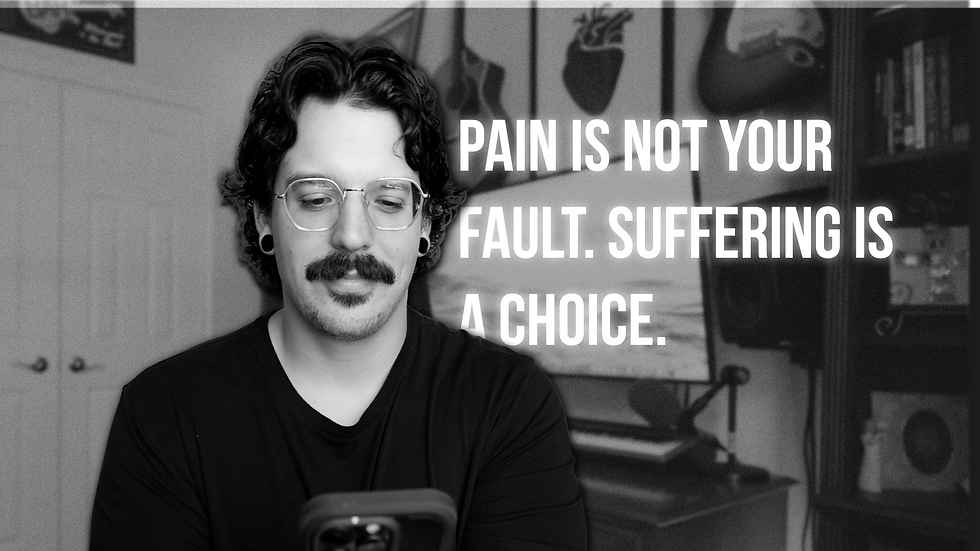
There's a line from a Rebelution song that's been sitting with me: don't you know it's you why you're suffering. Said out of context, that sounds harsh. Said with the right context, it might be the most freeing thing you hear this week.
Here's the distinction I want to draw out: pain and suffering are not the same thing.
Pain is what happens to you. It's inevitable. It's the skinned knee when you're seven and it's the slow realization that the way you've been living, managed, filtered, shaped around what's expected of you, isn't actually who you are. Pain is real, and it deserves to be worked through, not minimized.
Suffering is different. Suffering is the story you keep telling yourself about the pain. It's the rumination, the replaying, the attention you keep feeding it long after the original event is over. Suffering is what keeps you out of the present moment, stuck relitigating something that, a lot of the time, the other person isn't even thinking about anymore.
Pain is part of life. Suffering is a choice.
The Fastest Way Out of Suffering Is Forgiveness
If someone else did something to you, something significant, something you had no control over, the most direct path out of the suffering loop is forgiveness. Not because what happened was okay. It wasn't. Forgiveness doesn't excuse anything.
Here's what forgiveness is not:
It's not reconciliation. You don't have to rebuild the relationship.
It's not a feeling you have to wait to arrive. You don't need some emotional breakthrough to qualify.
It's not saying what happened was acceptable.
Forgiveness is a decision. That's it. You choose to stop holding onto the unforgiveness, whether or not the other person ever knows, apologizes, or is even still alive. There's an old line that captures this well: holding onto unforgiveness is like drinking poison and expecting the other person to die. You're the one who suffers. Every day. On repeat. And the other person, most of the time, isn't thinking about you at all.
That's the part that reframes everything. Unforgiveness feels like control. It feels like you're still holding them accountable. But really, it's a mechanism that only punishes you. Meanwhile the pain compounds. It shapes the choices you make and the relationships you're in, often without you noticing.
Closing the Gap Means Dealing With What You're Still Carrying
Living dis-integrated, saying one thing and feeling another, showing up as who you were told to be instead of who you actually are, doesn't happen in a vacuum. A lot of the time it's held in place by pain you never resolved. Something you're still replaying instead of letting go of.
The same choice applies here too. You can acknowledge the pain was real without letting the suffering keep running the show.
So the question isn't whether you'll experience pain. You will. The question is what you're choosing to do with it, and whether it's still the thing keeping you managed and filtered instead of whole.
If any of this resonates I would love to hear what came up for you. Start a conversation:


Comments